Decisions sit with the community
Nothing proceeds without the YAC Board and a community meeting. Elders decide what is shared and with whom, and YAC can stop or change the pathway after any cycle.
A four-stage mentoring and employment pathway that helps Lama Lama Elders and Rangers pass cultural and land management knowledge to Junior Rangers, delivered with local high schools.
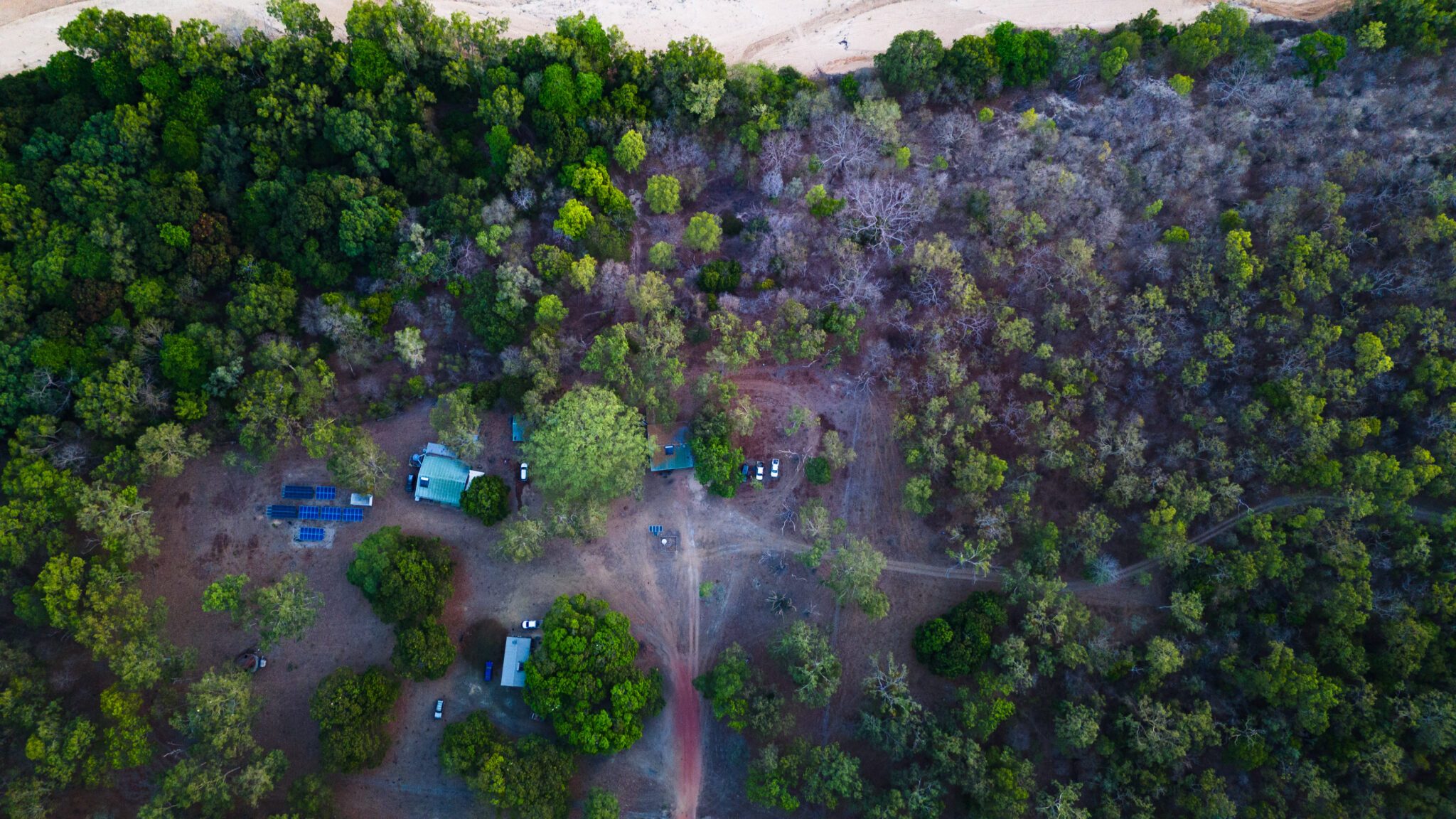
How might we help Elders and Rangers pass cultural and land management knowledge to Junior Rangers?
Junior Rangers · intergenerational knowledge · on-Country learning · employment pathway · Lama Lama · Cape York · mentoring · seasonal planning
The project addresses the limited time Elders, Rangers and Junior Rangers have together on Country through a four-stage pathway that sequences activities the Junior Ranger program already runs. Each stage has three core tasks and a finish point signed by a Ranger and an Elder, held on a printed record that needs no power or internet. The pathway ends in a route toward Ranger work, subject to approval by the Yintjingga Aboriginal Corporation and partner organisations.
The pathway arranges existing school-holiday activities into four named stages — Discover, Learn, Practise and Transition — that a Junior Ranger moves through over one or more dry seasons. Each participant is paired with a Ranger mentor, and every stage closes with a sign-off from a Ranger and an Elder, so progress is visible and culturally authorised.
It is supported by a local high school, which releases students for block days, and by the Ranger Work Plan, which supplies mentoring in-kind. The only physical component is a printed one-page calendar and progress record: Junior Rangers see where they are, mentors record sign-offs, and YAC uses the completed records to review each cycle.
What the Yintjingga Aboriginal Corporation and Engineers Without Borders would need to weigh before any part of this proposal proceeds, together with the assumptions the team made.
Nothing proceeds without the YAC Board and a community meeting. Elders decide what is shared and with whom, and YAC can stop or change the pathway after any cycle.
Training credit and work trials depend on a training provider and employers agreeing. Until they do, both are shown as pending throughout the materials so no young person is told a job is guaranteed.
Cohort size is capped by how many Rangers and Elders are available. The team could not determine that number and has assumed a small pilot cohort; this must be set locally.
The pilot runs in one dry-season school holiday with backup dates, because access closes from mid-November to April and cyclone recovery can reset the year.
That a local high school will partner; that mentoring time can come from the existing Work Plan; and that paper is more reliable than any digital tool given connectivity at Port Stewart.
The prototype has not been tested with Junior Rangers, and Elder availability and protocols for gender-specific activities are unconfirmed.
The project is located at Port Stewart, Queensland, so the local currency is the Australian dollar. All figures below are AUD.
Printed one-page progress records (approximately 30 A4 colour sheets, ≈ $6) and a protective folder or sleeve for each Junior Ranger (15 at ≈ $1.50, ≈ $23).
None. Transport and fuel for the pilot block are the one substantial running cost, at roughly $1,100.
Around 20 Ranger-days of mentoring in-kind within the Work Plan, plus Elder honoraria at a rate set by YAC.
Approximately $1,100 to $1,500 AUD in cash for a single pilot cycle, dominated by transport, plus in-kind Ranger time and Elder honoraria set by YAC. Certificate II training is subsidised, with the co-contribution fee waived for First Nations students.
A full bill of materials and sourcing is given in the cost analysis. Costings are drawn from the sources listed on the references page.
This website is student work prepared by David’s Friends at the University of Technology Sydney for the Engineers Without Borders Challenge 2026. It is a proposal only. It has not been reviewed or endorsed by the Yintjingga Aboriginal Corporation or the Lama Lama Land Trust.
We acknowledge the Lama Lama People as the Traditional Owners of the land and sea Country around Princess Charlotte Bay, where this project is based, and pay our respects to Elders past and present. We also acknowledge the Gadigal people of the Eora Nation, on whose land UTS stands and where this work was produced.